Designing the platform designers actually needed
How we turned two senior designers’ experience into a FAQ-first platform for UI/UX and product designers, one honest, searchable answer at a time.
behind every answer
Junior · Mid · Senior
around real questions
and growing
The knowledge is out there. It’s just everywhere at once.
Every designer has the same problem: questions that matter but nowhere reliable to ask them. Reddit drifts into opinion wars. Articles pad the basics for SEO. Bootcamps teach theory, not the things that come up on day three of a real project.
The junior designer asks: when should I push back on a stakeholder? The mid-level asks: how do I know if my design system is too complex? The senior asks: how do I run a design critique that actually produces decisions? None of them have a place to go where the answer is short, honest, and written by someone who has faced the same situation on a real product.
Learn2UX was built to close that gap: between the question and an answer worth trusting.
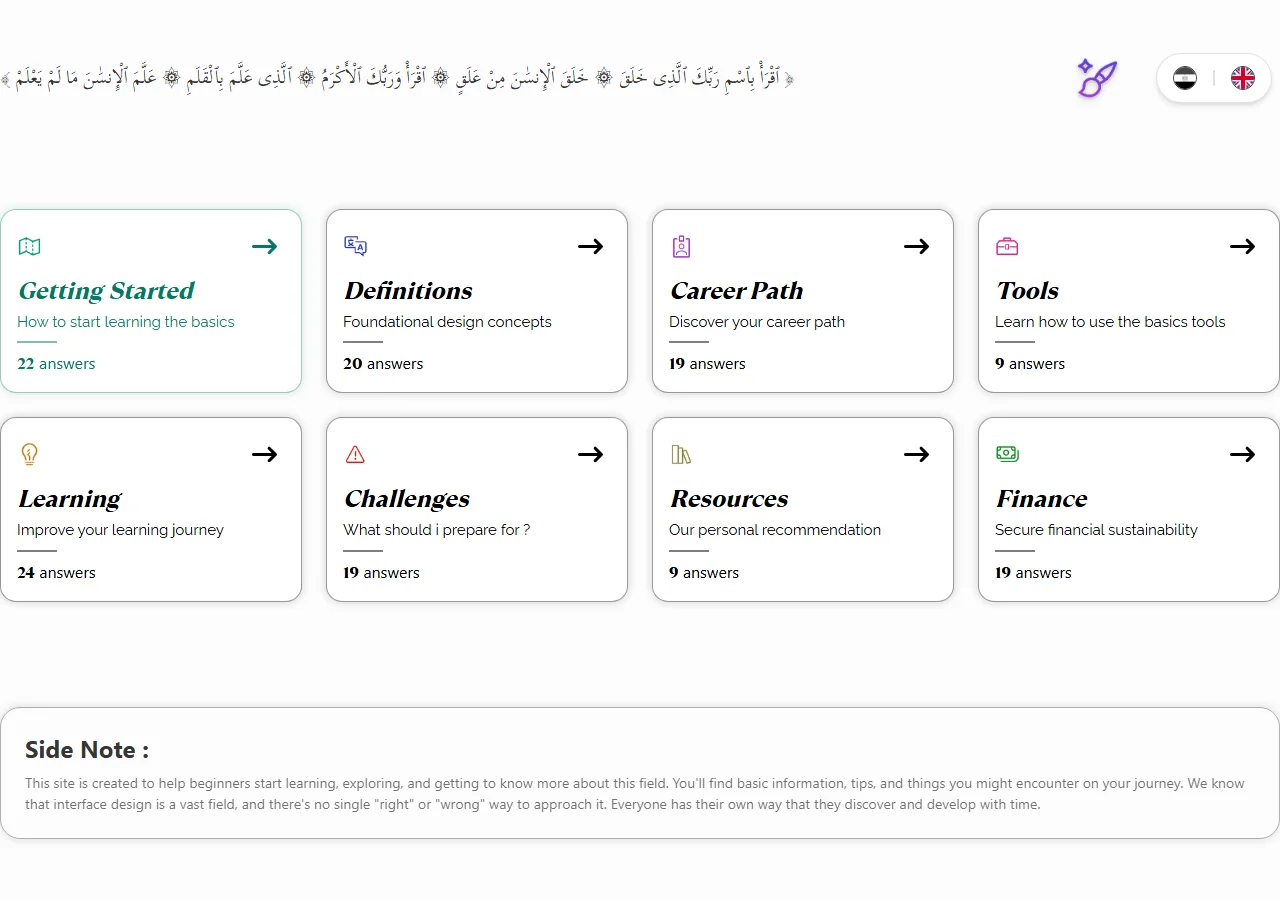
A FAQ as a product, not a footnote
Most platforms bury the FAQ at the bottom of a help page. We flipped it. The FAQ is the product: every question an entry point, every answer first-class. A course asks you to commit time and hope it covers your gap; a FAQ starts where you already are.
The format forces a discipline: you cannot pad a FAQ answer. Either you know it or you don’t. That constraint turned out to be the feature.
The choices that shaped what we built
Every answer is tagged with the level it fits, so designers self-locate rather than get locked out. The same question at a different career stage deserves a different answer.
Designers arrive with a question, not a mood to browse. Navigation is minimal and the search bar is the first thing you see. The information architecture serves the person who knows what they are looking for.
Every answer follows the same anatomy. Consistency makes scanning faster: skip straight to the example if you already have the concept.
Co-authored by two senior designers with different specializations. We write independently and edit together; every answer that ships has passed both sets of eyes.
The answer anatomy — the structure we apply to every FAQ entry on the platform:
The answer to the question, stated plainly. No preamble. The user asked a question — the first thing they read is the answer.
Why this is the answer. The forces, tradeoffs, or constraints behind it. This is where experience shows up — not in opinion, but in understanding why things are the way they are.
A real or realistic scenario where the answer plays out. The difference between knowing a principle and knowing how to apply it.
A pointer — a concept, a framework, a reference — for the reader who wants more. Optional, but present for every answer.
One platform, three journeys
“How should I handle feedback?” means one thing to a junior designer getting their first redline and another to a senior fielding a stakeholder who wants to override research. We built three levels in from day one, not to wall off content but to surface the most relevant version of an answer first.
Building the foundation. Questions about craft, process, tools, how to work with others for the first time. Answers prioritize clarity over nuance.
Growing ownership. Questions about influence, system thinking, navigating ambiguity, going beyond execution. Answers add tradeoffs and context.
Shaping direction. Questions about leadership, strategy, organizational dynamics, taste. Answers are honest about what there’s no playbook for.
Two designers, one editorial process
Two senior perspectives beat one, not because one is a check on the other but because real design questions rarely have a single correct answer. We built the editorial process before writing a single answer, and agreed what “good” meant: direct, specific, honest about uncertainty. If an answer needed three paragraphs to justify, the real answer was usually in the third.
Questions we disagreed on turned out to be the most valuable ones to include. Disagreement between experienced designers signals a topic that is genuinely hard.
When two senior designers answer the same question differently, that difference is information. It tells the reader that there’s no universal right answer — and that context, team, product, and moment all matter. We surfaced those disagreements on the platform rather than resolving them into false consensus.
A live platform, built to grow
Learn2UX is live at learn2ux.com, with a curated FAQ library organized by topic and seniority, a search-first interface, and the editorial process behind it. The design work covered information architecture, content taxonomy, search, answer layout, seniority tagging, and the visual language, all tested against one question: does a designer leave with something they can use?
Building for designers is a particular kind of test. The audience notices everything, and there is no hiding behind good intentions. The most useful thing we built was not the FAQ library, it was the editorial standard: the library grows, the standard decides whether it stays worth reading.
“Designers don’t need more content. They need fewer, better answers.”