Designing a market reader that shows its work
The analytics engine of KANZ Markets, designed as eleven working surfaces in code for an Arabic-first audience that wants to understand the market, not be told what to buy.
live in the product
across 104 countries
Arabic-first, RTL
dark-mode text audit
An engine with no interface, and no room for tips
KANZ Markets teaches Arab professionals how markets behave. RADAR is its analysis engine: it reads an asset technically, fundamentally and against the macro picture, and resolves that into one verdict. When I picked it up in March 2026 the methodology existed and the community existed, but no member could actually use the engine.
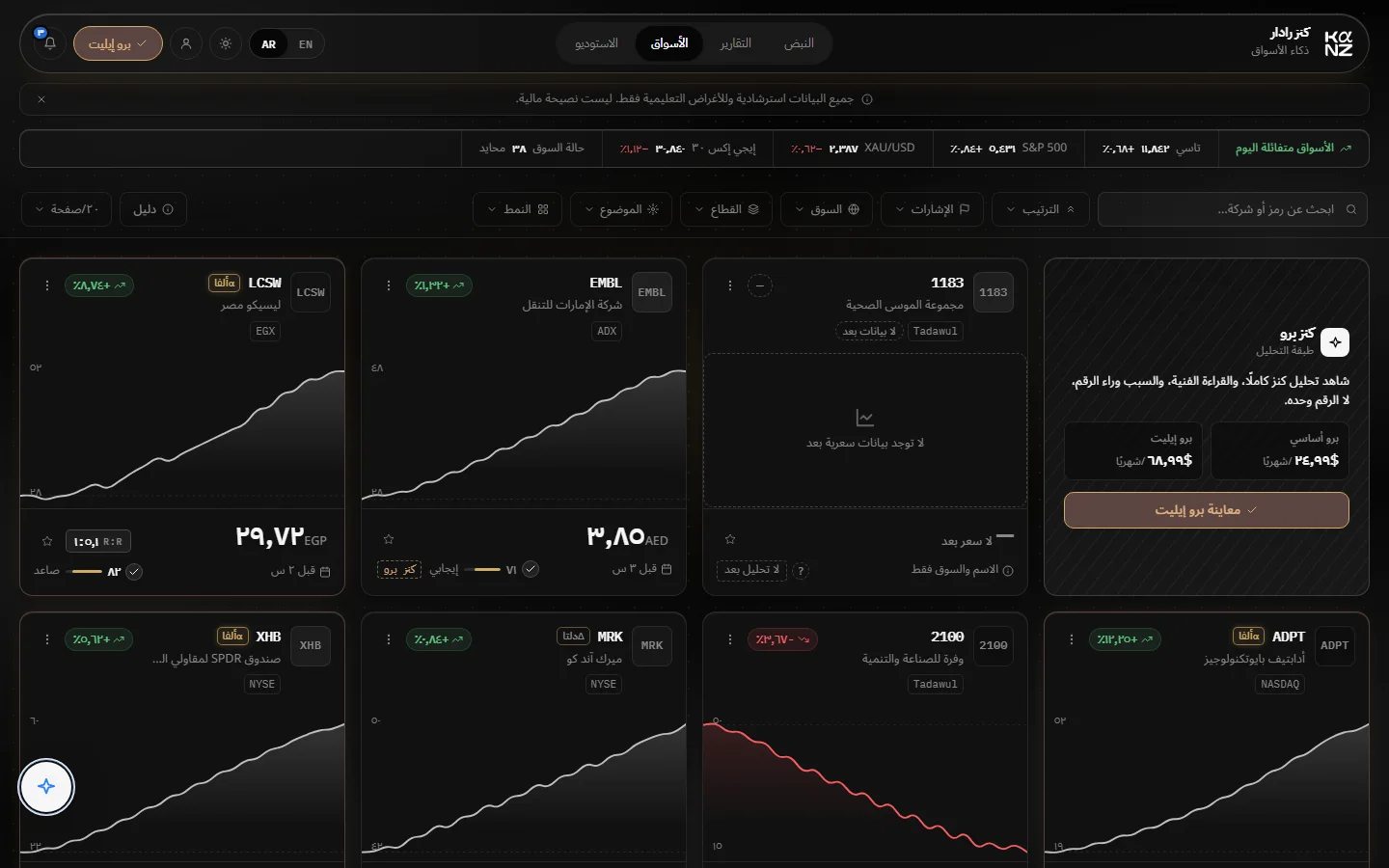
The constraints were the brief. Educational and non-advisory by regulation, so nothing on screen could read as “buy”. Arabic-first, right to left, with English as the second language. And sold as a feature inside the membership packages rather than as its own product, so locking had to be a state, not a paywall.
Personas first, structure second, pixels last
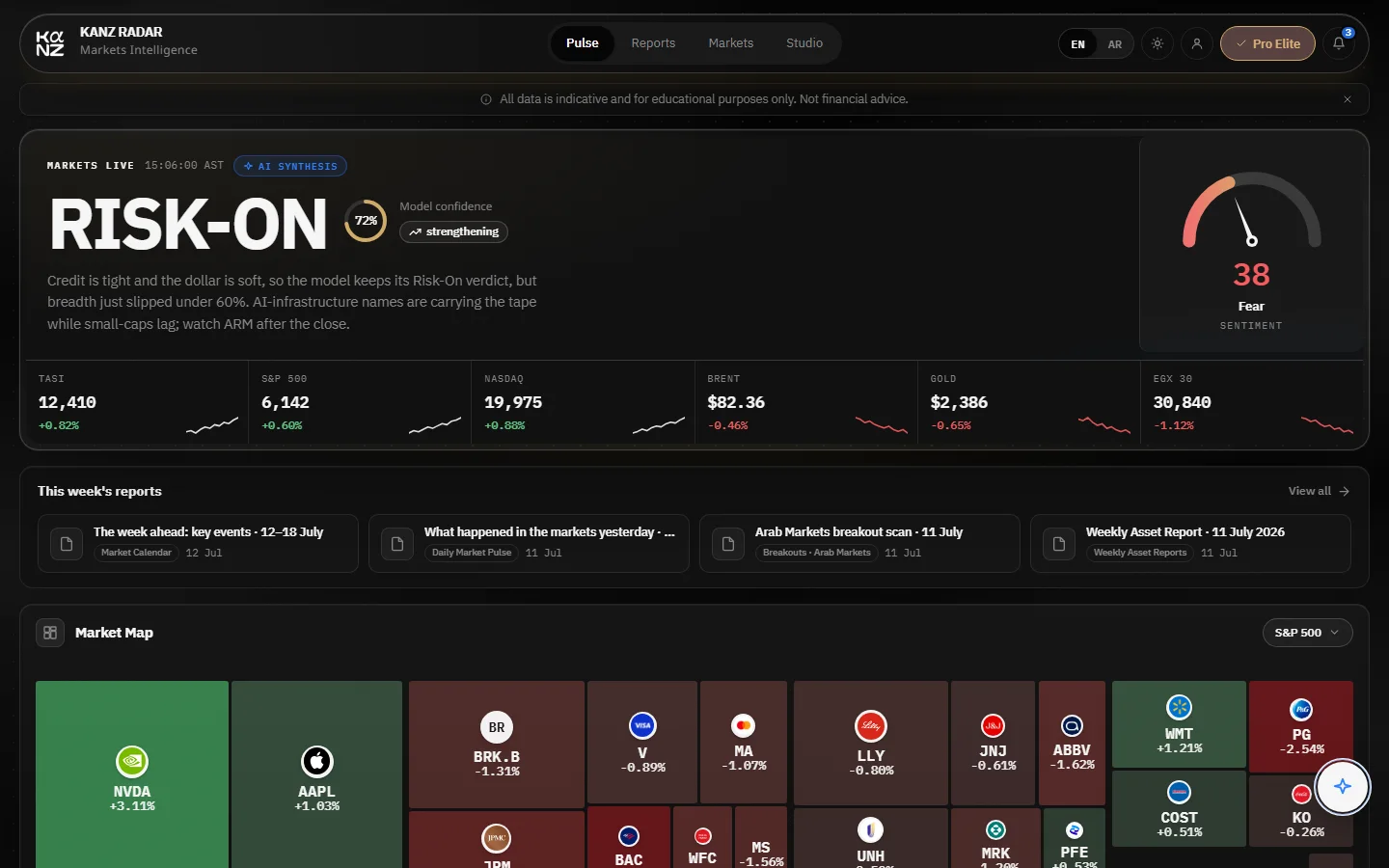
I started from the four personas KANZ already publishes, in their own words: the beginner who wants to learn properly, the opportunity seeker who wants a clear view of Arab and global markets, the executive with no time, and the ambitious trader. Each one arrives with a different question, so the product got one spine and every surface became an entry point onto it: orient on Pulse, understand on Markets and the asset page, judge with Kanz Pro, act on your own book.
Information architecture and user flows came before any visual work. Then every surface was built as a working page in the real token set, reviewed with the product owner in short rounds, and audited three ways: the engineering build against the design, all user-facing copy for register and tone, and every chart for contrast as rendered in dark mode. The usability findings from member sessions are added to this page as they are measured.
Four decisions, and why
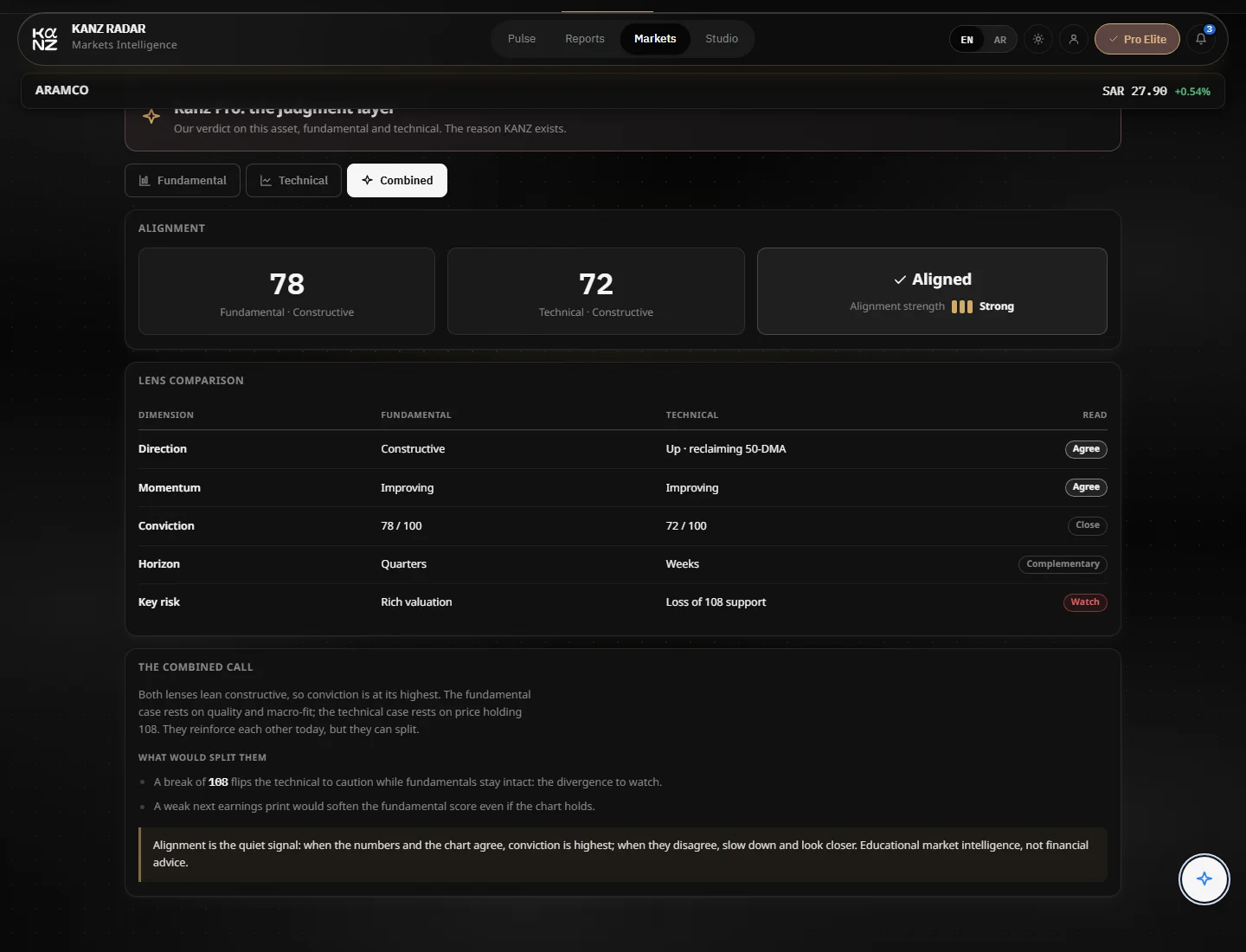
Every asset is scored on two independent lenses, fundamental and technical, and the Combined view leads with whether they align, how strongly, and what would split them. Why: a single score is a tip in disguise. Showing two reads and their disagreement is what turns the product from a signal into a lesson, and it is the mechanism no neighbouring product could copy truthfully.
Hierarchy is carried by size, weight and position. Colour is reserved for what is measured: green and red only as a positive or negative reading, gold only for what is paid for or scored, and the categorical hues on instruments like the allocation ring and the report covers. Why: a member should feel the number, not the interface. When colour never promotes a heading or a button, every green and red on the screen is information.
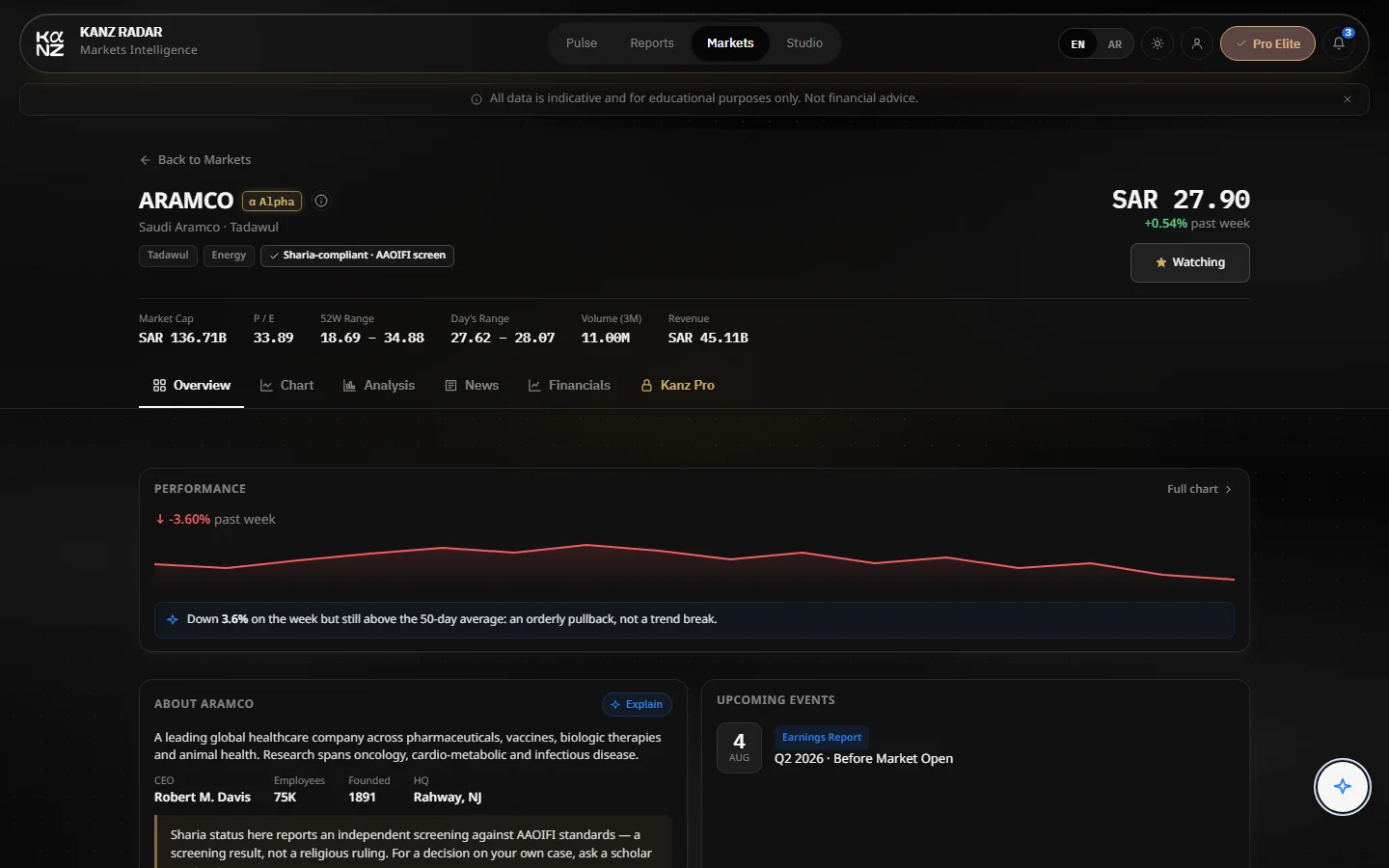
Sharia status is shown as a reported screening result against a named standard, with “not a religious ruling” on every surface in both languages, and the Kanz Score carries its own guard rail: a high score means the asset scores well on what we measure, right now. Why: the product’s regulatory footing and its credibility with a religiously literate audience both depend on never authoring a claim that belongs to someone else.
Every surface was built as a working page rather than a mockup, and the Figma file is generated from the code by a small export tool. Why: with one designer and a moving engineering build, a static mockup would have been out of date within a week. A working page gave engineering something to match instead of interpret, and when the live build drifted it was audited against these pages and corrected.
What changed because of the work
RADAR went from a methodology with no interface to a live product inside every KANZ Pro package, serving the 10,000-plus member community KANZ reports across 104 countries. The design pages became the source of truth engineering builds against, and the marketing site was rebuilt in the same family so a visitor arriving from the app keeps their language and their bearings.

“A verdict without its reasoning is a tip. The whole product is the reasoning.”
The decisions that mattered most were refusals: no single score without its two lenses, no claim the product did not own, no mockup that engineering had to interpret. Each cost something obvious and bought something that compounds.